
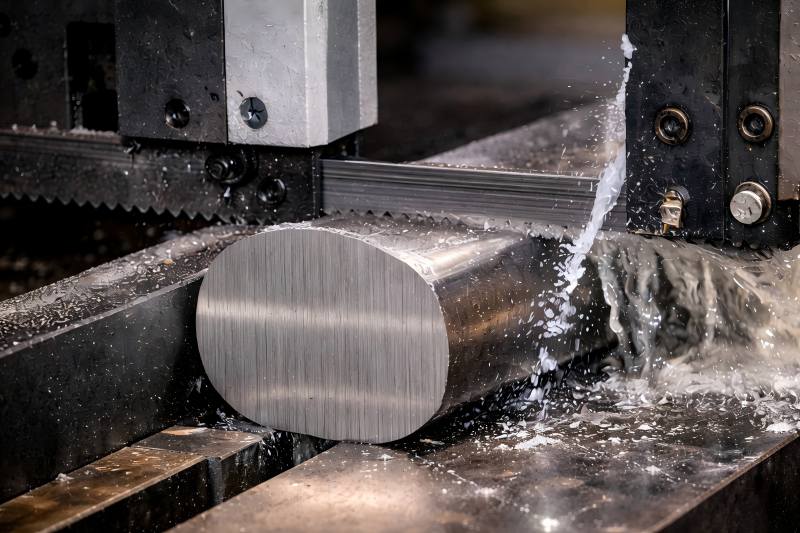
Titanium is a highly valued engineering metal due to its exceptional strength-to-weight ratio, corrosion resistance, and biocompatibility. These same characteristics, however, make it challenging to machine. It work-hardens quickly, has low thermal conductivity, and accelerates tool wear. For machinists and engineers, selecting the right cutting methods is critical to ensuring efficiency, tool life, surface quality, and cost control.
In this guide, we’ll explore 11 proven methods for cutting titanium in 2026 — from traditional sawing to high-precision laser cutting. We’ll explain each method, the advantages and limitations, and practical applications.
Why Cutting Titanium Is Challenging
Before diving into methods, it’s critical to understand the unique behavior of titanium:
- Work Hardening: Titanium hardens rapidly under mechanical stress.
- Low Thermal Conductivity: Wear is accelerated by heat remaining close to the cutting zone.
- Chemical Reactivity: At elevated temperatures, titanium reacts with tool materials, reducing tool life.
These factors influence the choice of cutting tools, speeds, cooling strategies, and more.
Table 1 — Properties of Titanium Affecting Machining
| Property | Effect on Cutting |
| Low thermal conductivity | Heat concentrates at the cutting edge → rapid tool wear |
| High strength | Higher cutting forces than steels |
| Work hardening | Surface layers harden during initial contact |
| Reactivity at high temperature | Tool materials can oxidize or wear |
Ways to Cut Titanium
Band Saw Cutting
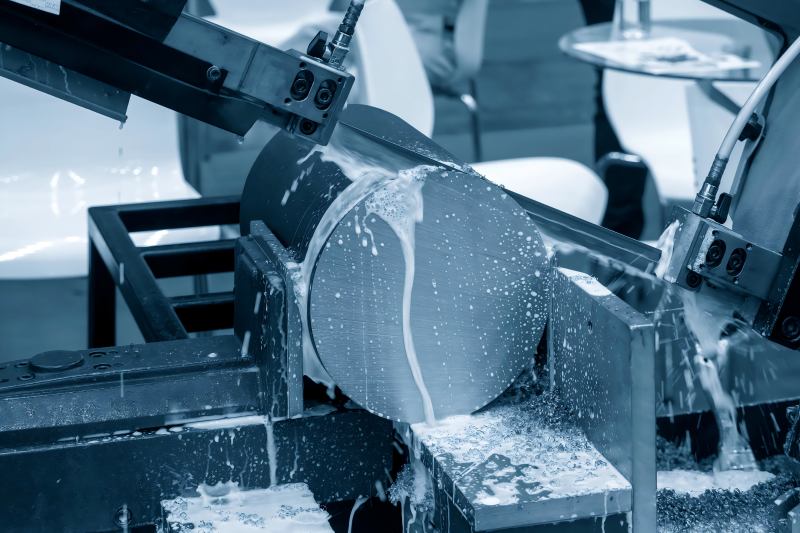
Band saws with bi-metal blades are popular for rough cutting titanium stock like bars, tubes, and plates.
Best Practices
- Use carbide-tipped or bimetal blades.
- Keep feed rates slow to avoid work hardening.
- Use plenty of coolant or cutting fluid.
Circular Saw Cutting

Circular saws can cut thicker titanium sections with sturdy blades.
Blade Recommendations
Use carbide-tipped blades designed for nonferrous metals.
Laser Cutting
Overview
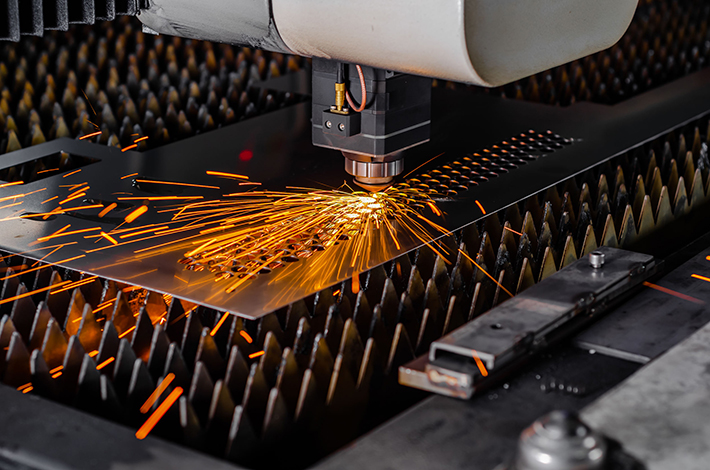
Laser cutting (especially fiber laser) offers high precision and clean edges.
Application
Best for thin to medium titanium sheets, complex geometries, and high-speed cutting.
Laser Cutting Parameters (Typical)
| Parameter | Recommendation |
| Laser type | Fiber laser |
| Power | 2 kW — 6 kW (sheet thickness dependent) |
| Assist gas | Nitrogen |
| Cutting speed | 5 — 20 m/min |
| Kerf width | 0.1 — 0.3 mm |
Waterjet Cutting
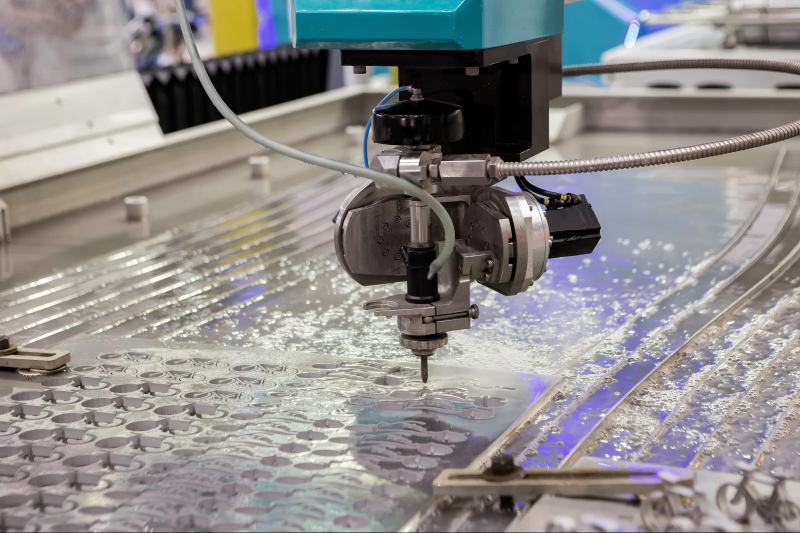
Waterjet cutting uses high-pressure water plus abrasive material to cut titanium without heat.
Best Uses
- Thick plates
- Complex parts with no heat-affected zone
Plasma Cutting
Plasma cutting is often used for thicker titanium (> 10 mm), especially in structural fabrication.
Notes
Use pulled arc or high-definition plasma systems for better cut quality.
CNC Milling
For precision features, holes, and profiles, CNC milling remains a go-to method.
Tooling
- Carbide tools with high TiAlN coating
- Rigid setups to control vibration
Cutting Tips
- Moderate speeds and feeds
- Use coolant or minimum quantity lubrication (MQL)
Milling Speeds & Feeds (Titanium)
| Tool Size | Spindle Speed | Feed per Tooth | Depth of Cut |
| Ø6 mm | 400 – 600 rpm | 0.02 – 0.04 mm | 0.2 – 0.3 mm |
| Ø10 mm | 300 – 500 rpm | 0.03 – 0.06 mm | 0.3 – 0.5 mm |
| Ø12 mm | 250 – 450 rpm | 0.04 – 0.08 mm | 0.4 – 0.6 mm |
Note: Actual values depend on machine rigidity and coolant application.
Turning (Lathe Operations)
Turning titanium on a lathe is common in producing shafts, bushings, and cylindrical parts.
Tips for Turning
- Use positive rake angles to reduce cutting forces.
- Keep the depth of cut moderate.
- Apply coolant to reduce tool heat.
Abrasive Sawing / Chop Saw
Abrasive wheels can cut titanium in fabrication shops where precision is less critical.
Best For
- Structural members
- Prototype cutting
Note
Abrasive cutting induces heat — ensure proper cool-down to avoid warping.
EDM (Electrical Discharge Machining)
EDM cuts titanium with electrical sparks — ideal for complex shapes and tight tolerances.
Types of EDM
- Wire EDM – Excellent for profiles
- Sinker EDM – Good for cavities
Water Jet + Laser Hybrid Cutting
Hybrid cutting systems that blend waterjet and laser cut can deliver both speed and edge finish, particularly for medium gauge titanium.
Ultrasonic Cutting
Ultrasonic cutting uses high-frequency vibrations with a blade or abrasive slurry.
Best For
Specialized uses of thin titanium foil
How to Pick the Best Cutting Technique
Choosing the best cutting technique is influenced by multiple factors:
- Material thickness
- Required tolerance
- Surface finish
- Production volume
- Equipment availability
- Cost constraints
The table below helps with quick selection:
Method Selection Guide
| Cutting Method | Best For | Accuracy | Throughput | Cost |
| Band Saw | Rough cuts | Low | High | Low |
| Laser | Sheets/Complex shapes | High | High | Med-High |
| Waterjet | Thick plates | Med-High | Med | High |
| Plasma | Thick heavy sections | Med | High | Med |
| Milling | Precision parts | High | Med | Med |
| Turning | Cylindrical parts | High | High | Med |
| EDM | Complex shapes | Very High | Low | High |
General Best Practices for Cutting Titanium
Regardless of the cutting method, the following best practices can improve results:
1. Use Rigid Fixturing
Titanium’s low thermal conductivity and work hardening make vibration control essential. Rigidity improves surface finish and tool life.
2. Optimize Speeds and Feeds
Start slow and gradually increase until the tool or surface finish begins to degrade. Avoid excessive speeds — the heat can accelerate wear.
3. Apply Proper Cooling
Titanium needs cooling — whether through flood coolant, MQL, or cryogenic cooling in advanced shops.
4. Use Coated Carbide Tools
Modern coatings like TiAlN, TiCN, and AlTiN help reduce adhesion and extend tool life.
5. Avoid Work Hardening
Do not dwell on one spot — keep the feed moving. If the feed stalls, the surface will harden and be much tougher to machine.
Comparison of Cutting Tool Materials
| Tool Material | Typical Use | Pros | Cons |
| High Speed Steel (HSS) | Low cost | Tough | Wears fast on titanium |
| Carbide | General machining | High heat resistance | Brittle vs edge chipping |
| CBN | Finishing | Excellent wear resistance | Very expensive |
| Diamond | Very fine grinding | Best precision | Not suited for reactive metals |
Troubleshooting Common Issues
| Problem | Likely Cause | Solution |
| Rough finish | Too high feed | Reduce feed |
| Tool wear | Heat buildup | More coolant or a different tool coating |
| Burring | Work hardening | Sharper tool, proper rake angle |
| Chatter | Low rigidity | Improve fixturing |
Titanium is widely used in industrial, automotive, medical, and aerospace fields because of its exceptional mechanical properties. But machining this metal is challenging without the right strategies and equipment. From traditional band saws and CNC milling to advanced laser and EDM systems, there are multiple ways to cut titanium — each with specific use cases and benefits.