
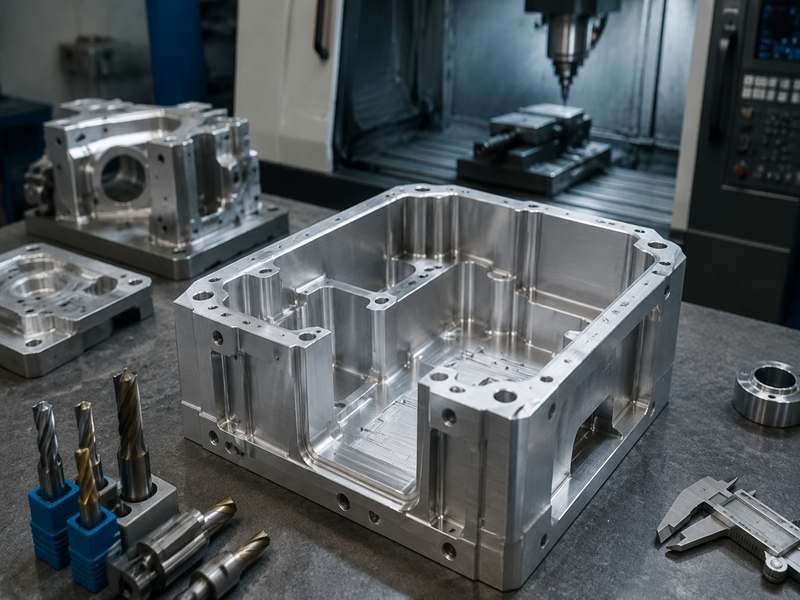
Deep pocket features are frequently used in CNC machined components, especially in housings, brackets, structural parts, and industrial equipment assemblies. However, creating these features requires careful design planning instead of simply adding a deep cavity to a CAD model.
A successful deep pocket design should consider machining accessibility, cutting stability, structural strength, and production efficiency. Proper design decisions during the early development stage can improve part quality while reducing unnecessary manufacturing difficulties.
What Are Deep Pocket Features in CNC Machined Parts?
A deep pocket is a recessed area machined into a workpiece where the depth is significantly greater than the opening size. These features are usually created through CNC milling operations with end mills or other cutting tools.
Deep pockets are commonly designed for:
- Reducing unnecessary material weight
- Creating internal space for components
- Improving structural optimization
- Supporting assembly requirements
Compared with standard shallow pockets, deep pockets require more attention during the design process because limited tool access and reduced cutting rigidity may affect machining accuracy and surface quality.
Key Design Considerations for Deep Pocket Features
When designing deep pockets for CNC machined parts, engineers should evaluate the relationship between part geometry, tool movement, and manufacturing capability. The following design considerations help create components that are easier to machine and more cost-effective to produce.
1. Optimize Pocket Depth-to-Width Ratio
The ratio between pocket depth and opening width is one of the most important factors affecting CNC machining performance. When a pocket becomes too deep and narrow, longer cutting tools may be required, which can reduce tool rigidity and increase the possibility of vibration.
A practical design approach should:
- Avoid unnecessary deep and narrow cavities
- Increase pocket opening dimensions when possible
- Match pocket depth with available tool lengths
- Consider machining accessibility during CAD design
| Pocket Design | Machining Performance |
| Wide and shallow pocket | Better cutting stability and higher machining efficiency |
| Moderate depth-to-width ratio | Balanced accuracy, tool life, and production efficiency |
| Deep-narrow pocket features | Higher chances of chatter vibration, tool bending, and prolonged machining cycles
|
Maintaining a reasonable depth-to-width ratio allows cutting tools to operate more steadily during machining. For production components, optimized pocket proportions can reduce tool wear and improve manufacturing consistency.
2. Appropriate Corner Radius Design
Internal corner layout acts as a critical design factor for CNC‑machined pocket structures. Since milling tools usually have circular cutting edges, sharp internal corners cannot be produced directly without additional machining processes.
A suitable corner radius design should:
- Avoid unnecessary sharp internal corners
- Match the radius with standard cutting tools
- Increase corner radius when the part function allows
A proper corner radius enables smoother tool movement and reduces additional machining operations. This improves manufacturing efficiency and makes the part easier to produce with standard CNC equipment.
3. Improve Tool Accessibility
Tool accessibility determines whether the cutting tool can effectively reach the required areas inside the pocket. Poor accessibility may require special tools, extra machining steps, or more complicated production setups.
When designing deep pockets, consider:
- Providing sufficient opening space for tool entry
- Avoiding narrow sections that restrict tool movement
- Allowing suitable tool approach directions
- Removing unnecessary internal obstacles
Good tool accessibility allows manufacturers to use more common machining tools and processes. This helps maintain stable production and reduces additional tooling requirements.
4. Maintain Proper Wall Thickness
Deep pockets often remove a large amount of material from a component, leaving thinner surrounding walls. If the remaining wall thickness is insufficient, the part may experience deformation during machining or fail to provide enough structural support.
| Wall Thickness Design | Manufacturing Result |
| Excessively thin walls | Higher possibility of vibration and deformation |
| Balanced wall thickness | Improved machining stability and structural strength |
| Overly thick walls | Increased material usage and unnecessary weight |
For CNC-manufactured component design, wall thickness needs to strike a reasonable trade-off between weight savings and mechanical robustness. Proper wall design helps maintain dimensional accuracy while ensuring the final component meets functional requirements.
5. Select Suitable Materials
Material selection directly influences the machining performance of deep pocket features. Different materials require different cutting conditions, tool selections, and machining strategies.
Aluminum:
Aluminum is commonly selected for deep pocket machining because of its lightweight characteristics and excellent machinability. This design approach sees broad application in enclosures, supports and structural parts prioritizing lightweight performance.
Stainless Steel:
Stainless steel delivers superior mechanical strength and anti‑corrosion properties, yet demands more thorough machining preparation. Deep pockets in stainless steel parts may need optimized cutting conditions to maintain tool life and surface quality.
Engineering Plastics:
Engineering plastics are suitable for lightweight components and special applications. However, designers should consider heat generation and possible deformation during the machining process.
Common Applications of Deep Pocket CNC Machined Parts
Deep pocket features are widely used in industries that require lightweight structures, internal space optimization, and accurate component integration.
| Industry | Typical Deep Pocket Applications |
| Automotive | Lightweight brackets, housings, structural components |
| Aerospace | Weight-reduced frames, precision structural parts |
| Robotics | Motor housings, mounting plates, support components |
| Industrial Equipment | Machine bases, covers, custom fixtures |
Automotive Components:
Deep pockets are commonly applied in automotive components to reduce unnecessary weight while maintaining sufficient structural performance. CNC machining allows manufacturers to create accurate internal structures for assembly and functional requirements.
Aerospace Components:
Aerospace components often require lightweight designs with optimized material distribution. Deep pocket features help remove excess material while maintaining the required strength and rigidity.
Robotics Components:
Robotic systems usually require compact structures with internal space for motors, sensors, and mechanical connections. Deep pockets provide better integration of internal components while maintaining overall part performance.
Industrial Equipment Parts:
Industrial machinery often uses deep pocket designs in fixtures, housings, and support structures. These features help improve equipment functionality while maintaining efficient manufacturing processes.
How to Reduce Deep Pocket Machining Costs?
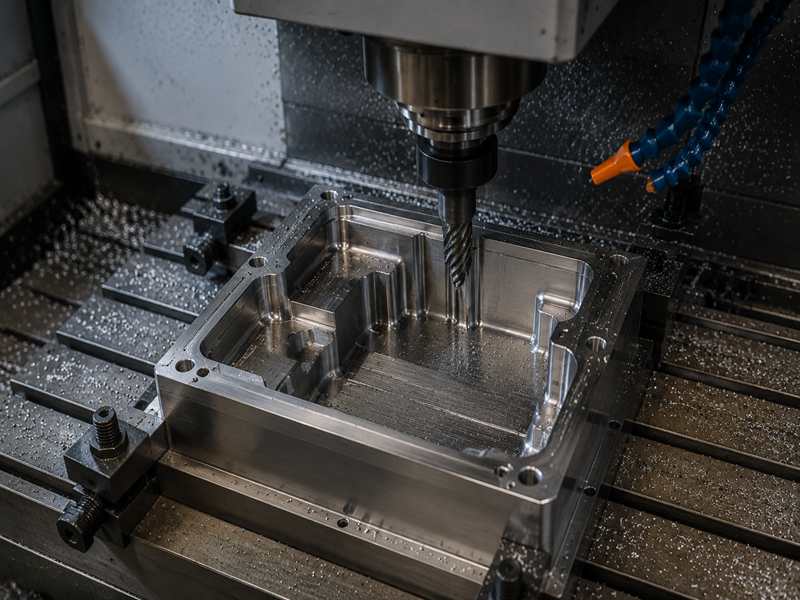
Deep pocket features may increase machining difficulty if the design is not properly optimized. Considering manufacturability during the design stage can help reduce production time and avoid unnecessary expenses.
Consider the following design approaches:
- Avoid excessive pocket depth when it is not functionally required
- Use standard cutting tool sizes whenever possible
- Simplify unnecessary pocket structures
- Maintain suitable wall thickness
- Discuss design limitations with manufacturers before production
For buyers preparing CNC machining projects, reviewing deep pocket designs with suppliers before manufacturing can help identify potential improvements and prevent costly design modifications.
Deep Pocket Design Checklist for CNC Machining
A practical deep pocket design should balance functional requirements with machining limitations.
| Design Factor | Key Consideration |
| Pocket Depth | Match depth with available cutting tool length |
| Pocket Width | Provide sufficient space for tool movement |
| Corner Radius | Select a suitable radius for efficient machining |
| Wall Thickness | Maintain structural strength and machining stability |
| Material Selection | Choose materials according to application requirements |