
Engineers and procurement teams face strict constraints when scaling industrial components. Shifting from prototyping to mass production demands high structural consistency. A reliable die casting manufacturer minimizes defect rates while controlling unit costs.
High-pressure die casting delivers rapid cycle times and excellent dimensional stability. However, matching part geometry with specific supplier capabilities remains critical. This guide breaks down technical evaluation and supplier qualification for custom die casting solutions.
What Determines Alloy Selection in Industrial Die Casting?
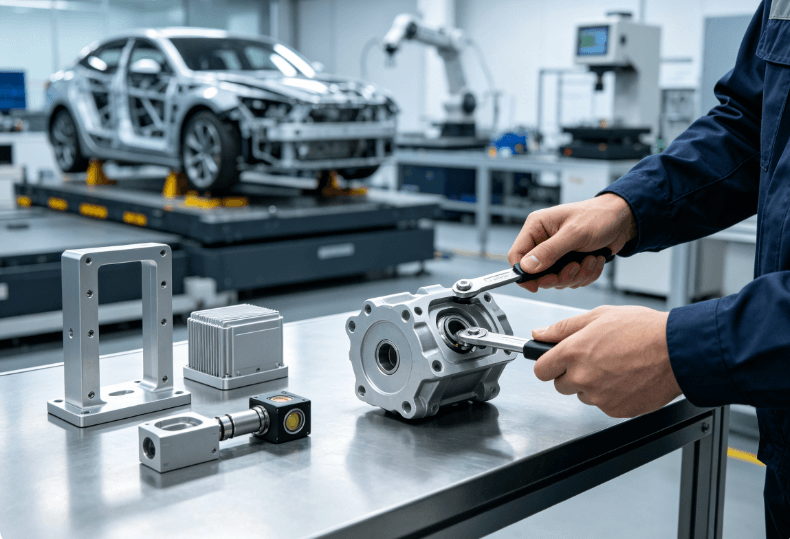
Selecting the correct metal alloy defines thermal performance and mechanical strength. A reliable die casting manufacturer evaluates your application environment before recommending materials. Different alloys present unique cooling rates and shrinkage properties during production.
For outdoor applications, corrosion resistance often dictates the final material choice. Aluminum alloys dominate industrial hardware due to exceptional dimensional stability. Zinc provides superior surface finish options and extends tooling life significantly.
Your manufacturing partner should provide mold flow analysis to validate these choices.
Table: Common Die Casting Alloys for Industrial Use
| Alloy Type | Common Grades | Key Industrial Characteristics | Typical Applications |
| Aluminum | A380, ADC12, A356 | High strength-to-weight ratio, excellent thermal conductivity. | Engine brackets, telecom housings. |
| Zinc | Zamak 3, Zamak 5 | High ductility, low melting point, superior plating capability. | Precision gears, electrical enclosures. |
| Magnesium | AZ91D, AM60B | Ultra-lightweight, high impact resistance, fast cycle times. | Power tools, aerospace components. |
Assessing Core Competencies of a Die Casting Manufacturer
Not all foundries can handle complex custom die casting solutions. Facility capabilities directly impact part quality and production lead times. Procurement teams must audit specific technical parameters before issuing an RFQ.
-
Machine Tonnage: Cold chamber machines typically range from 130 to 3,000 tons. Heavier parts demand higher locking forces to prevent flash.
-
Secondary Machining: Die casting rarely achieves ultra-tight aerospace tolerances alone. Suppliers must offer in-house CNC milling for critical mounting surfaces.
-
Porosity Control: Trapped gas compromises the structural integrity of cast parts. Look for vacuum die casting capabilities if pressure tightness is required.
-
Surface Finishing: Industrial components often require powder coating or anodizing. Integrated surface treatments reduce overall supply chain complexity.
Custom Die Casting Solutions for Automotive and Automation
Automotive environments typically require strict adherence to IATF 16949 standards. Structural components undergo severe vibration and intense thermal cycling. A specialized die casting manufacturer implements rigorous X-ray inspection to detect internal voids.
This non-destructive testing ensures critical components meet strict safety regulations. In industrial automation, sensor housings demand precise electromagnetic shielding. Zinc die casting frequently addresses these specific EMI and RFI shielding requirements effectively.
Robotic end-effectors also rely on lightweight aluminum to maximize payload capacities. Designing parts with uniform wall thickness prevents uneven cooling and subsequent warping.
The Role of Design for Manufacturability (DFMA) in Cost Reduction
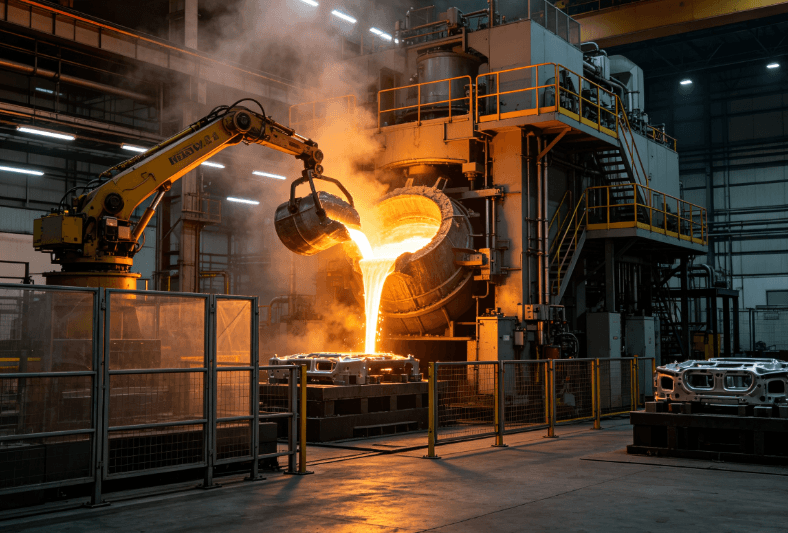
Before cutting steel for molds, engineers must perform comprehensive DFMA reviews. A proactive die casting manufacturer collaborates with OEM designers to eliminate undercuts. Removing unnecessary complex features significantly reduces the final tooling investment.
Draft angles are critical elements in custom die casting solutions. Without sufficient draft, parts will stick to the cavity and cause ejection damage. Generally, aluminum requires larger draft angles compared to zinc or magnesium.
Wall thickness optimization is another crucial factor for cost control. Overly thick sections increase cycle times and elevate the risk of internal porosity. Coring out thick areas maintains structural integrity while reducing raw material usage.
Analyzing Quality Control Protocols in High-Volume Production
In large-volume production, consistent quality assurance dictates overall project success. A tier-one die casting manufacturer implements automated inspection routines alongside manual checks. Coordinate Measuring Machines (CMM) verify complex geometric tolerances against original CAD models.
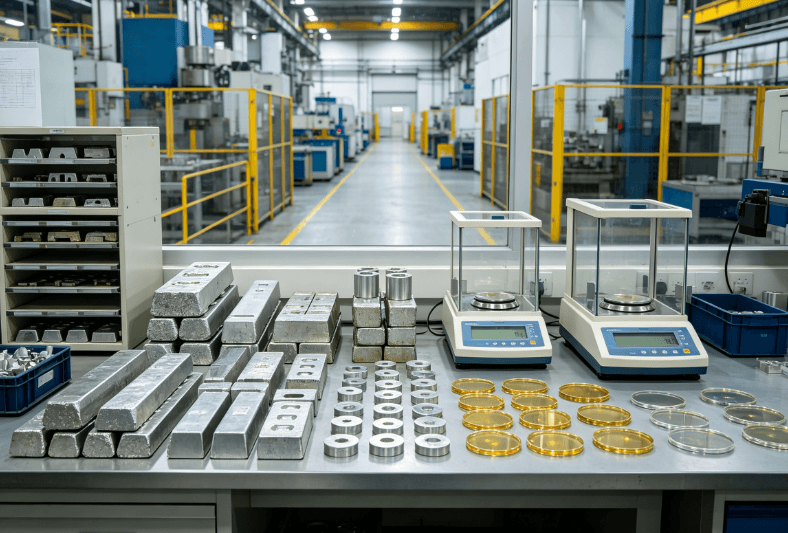
Spectrometer testing is equally critical for validating raw material composition before melting. Even slight alloy variations can drastically alter the mechanical properties of final parts. Reliable suppliers document these material certifications for every production batch.
Statistical process control (SPC) helps identify dimensional drifting during long runs. By monitoring machine parameters, operators can adjust injection speeds before defects occur. This proactive approach prevents costly scrap and ensures steady supply chain flow.
Managing Post-Casting Secondary Operations
Raw cast parts rarely meet the strict cosmetic requirements of modern industrial components. A full-service die casting manufacturer provides comprehensive post-processing solutions in-house. Vibratory deburring and shot blasting effectively remove sharp edges and surface imperfections.
For parts exposed to harsh environments, surface passivation offers critical corrosion resistance. Chromate conversion coatings prepare aluminum surfaces for subsequent painting or powder coating. These chemical treatments significantly enhance the adhesion of final cosmetic finishes.
Thermal treatments may also be necessary to relieve internal stresses. Some aluminum custom die casting solutions require T5 or T6 heat treatments. This controlled thermal cycling maximizes the tensile strength of the finished component.
Navigating the RFQ Process for Custom Industrial Components
Requesting an accurate quote requires detailed technical documentation from the procurement team. Submitting an incomplete RFQ often leads to wildly inaccurate pricing estimates. A professional die casting manufacturer needs both 3D models and 2D manufacturing prints.
The 2D prints must clearly indicate critical dimensions, tolerances, and surface finish requirements. Buyers should also specify the anticipated annual volume and target batch sizes. Production volume directly influences the type of mold steel selected.
Procurement teams must also outline any specific compliance standards upfront. Hidden quality requirements discovered later will inevitably delay the production schedule. Transparent communication ensures the initial quote reflects the true manufacturing cost.
Evaluating Die Casting Manufacturer Tooling and Lead Times
Tooling design represents the largest upfront investment in custom die casting solutions. Mold inserts are typically machined from premium H13 tool steel. A proficient manufacturer optimizes gating systems to minimize raw material waste.
-
Tooling Lifespan: Aluminum molds generally yield 100,000 shots before requiring refurbishment. Zinc molds operate at lower temperatures, often exceeding one million shots.
-
Sampling Delays: Initial T1 samples often reveal minor flash or dimensional deviations. Sampling delays may occur when complex geometries require multiple tooling modifications.
-
Order Quantities: Setup times for high-pressure die casting machines are substantial. Most industrial suppliers require specific MOQs to amortize setup costs effectively.
Advancing Production Capabilities with LYAH Machining
Finding a reliable supply chain partner accelerates the transition to mass production. LYAH Machining specializes in delivering precision custom die casting solutions for demanding sectors. Their engineering team provides comprehensive DFMA feedback to optimize part geometry.
By integrating advanced casting equipment with tight-tolerance CNC operations, they ensure assembly-ready components. Whether you require robust aluminum brackets or intricate zinc enclosures, their facility supports scalable output.
Review their comprehensive die casting services to understand their full technical scope. For specific OEM project evaluations and rapid RFQ processing, visit their contact page.
FAQ
What information is required to get an accurate RFQ from a die casting manufacturer?
You must provide 3D CAD models, detailed 2D drawings, material specifications, and surface finish requirements. Specifying estimated annual volumes and required batch sizes is also necessary for accurate tooling quotes.
How do die casting suppliers control internal porosity in thick-walled parts?
Suppliers control porosity by utilizing vacuum die casting technology to evacuate trapped gases from the mold. Engineers also optimize wall thickness and redesign gating systems to ensure uniform material flow.
Why do aluminum die casting molds have a shorter lifespan than zinc molds?
Aluminum melts at significantly higher temperatures than zinc alloys. This intense heat causes severe thermal shock and fatigue in the H13 tool steel over time. Consequently, aluminum molds require replacement or refurbishment much sooner.
Can custom die casting achieve ISO 2768-m tolerances without secondary machining?
High-pressure die casting can often achieve ISO 2768-m tolerances for general dimensions directly from the mold. However, mating surfaces or bearing fits usually require secondary CNC machining to meet stricter tolerance bands.
Are Minimum Order Quantities (MOQs) strictly enforced in die casting?
Yes, setup times for massive die casting presses and furnace preparations are expensive. Manufacturers enforce MOQs to spread these heavy setup costs across a larger production run efficiently.
Reference Sources
-
ISO 8062-3:2007 – Geometrical product specifications (GPS) — Dimensional and geometrical tolerances for molded parts.
-
ASTM B85 / B85M – Standard Specification for Aluminum-Alloy Die Castings.
-
NADCA Product Specification Standards – North American Die Casting Association guidelines for tooling, materials, and dimensional capabilities.