
Slot milling is widely used in many industries, such as aerospace, automotive, and medical manufacturing, and is one of the most important processes in CNC (Computer Numerical Control) machining. In this guide, we will take a deep dive into slot milling, its significance, the processes involved, and how it has evolved with the latest technological advancements in 2026.
Slot Milling: What Is It?
Using a rotating cutting tool to make slots or grooves on a workpiece is known as slot milling. The slot can either be a straight cut or have a more complex shape like T-slots, keyways, or blind slots. It is a crucial operation in CNC machining that enables precise and accurate slot formation, essential in various industries.
What Are Slots Used For?
Slots serve various functional purposes in parts, including:
- Accommodation for seals, gaskets, or keys: Used in mechanical assemblies for tight fits.
- Thermal expansion: Allows parts to expand and contract without distortion.
- Weight reduction: Reducing the mass of parts without compromising structural integrity.
- Mounting points: For attaching components securely, such as in automotive or aerospace machinery.
Why Is Slot Milling Important?
Slot milling is indispensable in several industries due to the following benefits:
- Precision and Accuracy: Slot milling ensures that the slot dimensions are extremely accurate, which is critical in applications where tight tolerances are required.
- Customization: Depending on particular needs, slots of various sizes and forms can be made.
- Versatility: Metals and polymers are among the many materials that can be machined using slot milling.
- Efficiency: This operation allows for high material removal rates when using specialized cutters, improving production speed and reducing costs.
Given its flexibility and utility, slot milling is a cornerstone operation in many complex manufacturing processes.
How Does Slot Milling Work?
Principle of Slot Milling
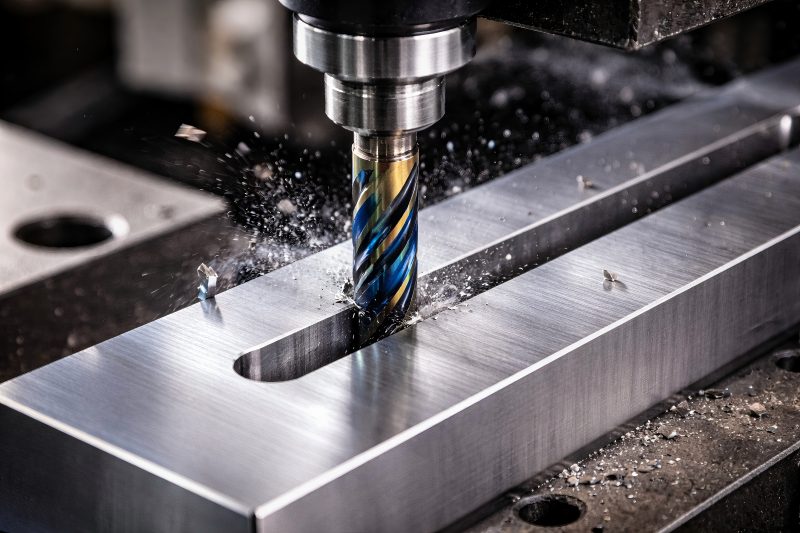
Slot milling works on the principle of removing excess material from a workpiece using a multipoint rotary cutter. The cutting tool rotates around a fixed axis, either axially or radially, to carve out slots in the material.
The general process involves:
- A slot milling cutter (such as an end mill or keyseat cutter) is chosen based on the slot geometry.
- The cutter moves along the workpiece, cutting the material into the desired slot shape.
The material is gradually removed by the cutter, and the desired slot is formed.
Step-by-Step Process of Slot Milling
- Define Slot Requirements: Determine slot width, length, and depth.
- Select the Cutting Tool: Choose between an end mill, slot mill, or other cutters.
- Workpiece Setup: To stop the workpiece from moving while being cut, secure it with the appropriate fixturing.
- Machine Setup: Ensure the milling machine is properly configured with the right tool and parameters.
- Cutting Parameters: Set spindle speed, feed rate, and other cutting parameters.
- Begin Slot Milling: Start the milling process, usually beginning with roughing and then finishing passes.
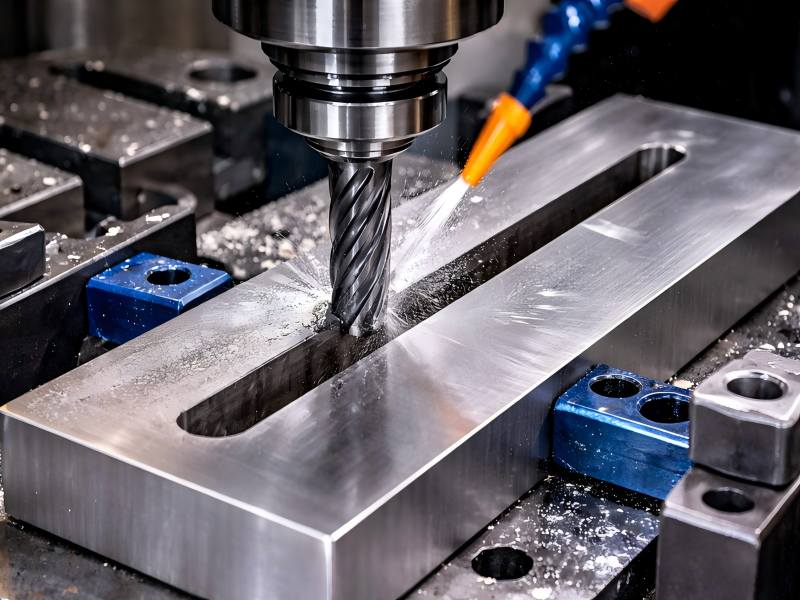
- Chip Removal and Cooling: Use coolant or air jets to clear chips and prevent overheating.
- Inspection and Cleaning: Measure the slot dimensions to verify accuracy, then clean the workpiece.
Key Factors Affecting Slot Milling Performance
The efficiency of slot milling is affected by several factors, including workpiece material, cutter selection, and milling parameters. The following are some of the main factors influencing the process:
1. Workpiece Material
Different materials, such as aluminum, steel, or plastics, respond differently to milling forces. Harder materials require more cutting force, while softer materials may produce long chips that can clog the slot. Choosing the right tool for the material is crucial for efficient milling.
| Material | Machining Challenge | Solution |
| Aluminum | Low cutting forces | Use carbide cutters |
| Steel | High cutting forces | Use high-speed steel (HSS) or carbide tools |
| Plastics | Chip evacuation issues | Use special cutters designed for plastics |
2. Slot Shapes
The shape of the slot impacts the cutting force and tool engagement. Narrow slots require more precise tooling and are harder to cut due to poor chip evacuation, whereas wider slots provide better chip removal.
3. Milling Cutter Selection
The right cutter ensures better efficiency and surface finish. Here’s a table showing the recommended cutter types for different slot shapes:
| Slot Shape | Recommended Cutter | Why This Cutter Is Suitable |
| Straight Slots | End Mill | Versatile, good dimensional control, suitable for shallow to medium-depth slots |
| Keyway Slots | Keyseat Cutter | Precise keyway width and depth, good for mechanical assemblies |
| T-Slots | T-Slot Cutter | Allows undercutting and machining of T-slot grooves |
| Multiple Slots | Gang Mill | Multiple cutters for high productivity and multiple slots at once |
4. Toolpath Approach
How the milling cutter enters, travels through, and leaves the material is specified by the toolpath.Selecting an optimal toolpath strategy is critical for minimizing tool wear, improving accuracy, and reducing cutting forces. Some strategies are:
- Conventional milling involves the tool and workpiece being in constant contact.
- A circular, oscillating path that lowers cutting forces and prolongs tool life is called trochoidal milling.
- Plunging: Ideal for deep or narrow slots, especially when the depth-to-width ratio is high.
5. Milling Direction
The direction in which the tool moves relative to the workpiece can influence surface finish, cutting forces, and tool life. There are two main categories:
- Climb Milling: The cutter and feed travel in the same direction. Results in less tool wear and improved surface finishes.
In traditional milling, the cutter moves against the direction of the feed. This technique is typically used on older machines but can cause more wear and rougher finishes.
Slot Milling: Common Shapes and Their Applications
Different slot shapes are created depending on the part’s purpose and application. The most popular slot kinds and their applications are as follows:
1. Straight Slot
Used to create narrow grooves that allow movement of parts or house functional elements like keys and wires. Often found in mechanical components, such as drawer slides or robotic arms.
2. Keyway Slot
Keyway slots are essential for transferring torque from a shaft to a hub or ensuring mechanical lock. They are common in automotive and machinery parts like flywheels and shafts.
3. T-Slot
T-slots are used for parts that require adjustability before tightening, such as fixture mounting in assembly lines or clamping systems. The “T” shape helps prevent bolt pull-out.
4. Dovetail Slot
Dovetail slots have angled walls that create a self-locking mechanism, commonly used in tool holders or linear slide guides.
5. Through Slot
A full-depth opening that allows easy chip evacuation, used in fasteners, bolts, or other components that require a continuous opening.
6. Blind Slot
These slots have a closed end, ideal for internal channels. They are used when the slot’s appearance must be maintained while providing internal routing, such as in electrical components.
Toolpath Strategies: Traditional vs. Trochoidal Slot Milling
Toolpath strategies are essential for determining how the milling cutter interacts with the material. Here’s a comparison between traditional and trochoidal slot milling:
| Aspect | Traditional Slot Milling | Trochoidal Slot Milling |
| Tool Engagement | Full-width engagement | Partial, constant engagement |
| Cutting Forces | Higher | Lower and stable |
| Heat Generation | Higher | Reduced |
| Tool Wear | Faster | Slower, more uniform |
| Slot Depth | Limited per pass | Suitable for deep slots |
| Productivity | Moderate | High at higher speeds |
Trochoidal milling is especially beneficial for deeper slots or when the cutting tool is under high stress, as it reduces heat and tool wear.
Pros and Cons of Slot Milling
Advantages of Slot Milling
- High Cutting Efficiency: Multiple teeth on the cutter engage the material simultaneously, allowing for faster material removal.
- Versatile Shapes: Because slot milling cutters may produce a variety of shapes, they can be used in a range of applications.
- Precision: With controlled tool engagement, slot milling offers high precision and smooth finishes.
Slot milling’s drawbacks
- Tool Wear: Rapid tool wear, particularly in deep or narrow slots, can result from the cutter’s constant interaction.
- Limited Slot Width: The width of the slot is limited by the cutter size, which may require tool changes for different slot sizes.
- High Cutting Forces: The process can generate significant cutting forces, particularly with harder materials, requiring robust machines.
Slot milling remains one of the most important CNC operations due to its versatility and precision in creating a variety of slot shapes. From automotive parts to aerospace applications, slot milling ensures functional parts with tight tolerances and fine surface finishes. As technology advances, modern techniques like trochoidal milling and optimized toolpath strategies continue to improve efficiency and reduce tool wear. By understanding the factors that affect slot milling performance and selecting the appropriate tools and strategies, manufacturers can enhance productivity and precision in their operations.