
In modern precision manufacturing, CNC grinding is essential for achieving tight tolerances, high-quality finishes, and consistent results. While milling and turning remove material efficiently, grinding serves as the final step to refine parts to exact, often micron-level specifications. From aerospace to medical and automotive applications, it ensures superior performance and reliability.
What Is CNC Grinding?
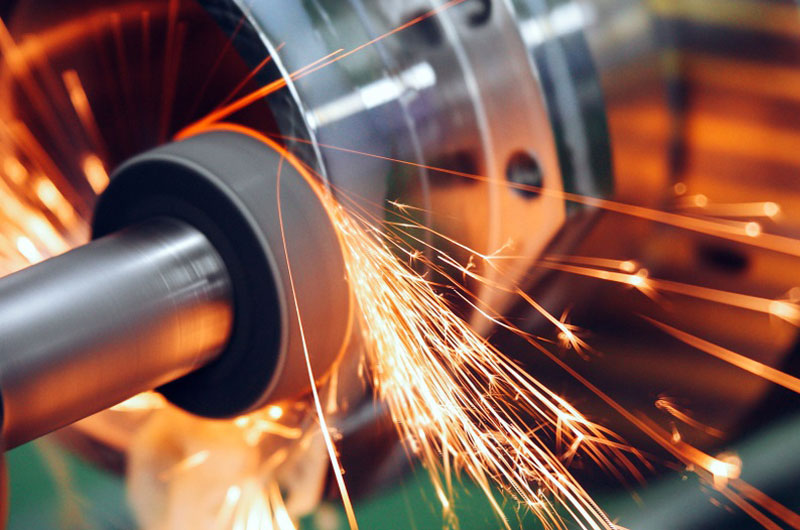
CNC grinding is a type of machining where small amounts of material are removed from a workpiece using a revolving abrasive wheel. High precision, reproducibility, and automation are guaranteed by the process, which is managed by computer numerical control (CNC).
Key Characteristics
- Ultra-high dimensional accuracy
- Excellent surface finish (Ra < 0.2 µm possible)
- Suitable for hard materials
- Ideal for finishing operations
Unlike conventional machining, grinding focuses on fine material removal, making it essential for achieving tight tolerances and smooth surfaces.
Overview of the CNC Grinding Workflow
The CNC grinding process involves multiple stages, each contributing to the final quality of the part.
CNC Grinding Workflow Summary
| Stage | Description | Objective |
| Raw Material Preparation | Selecting and cutting stock | Ensure proper starting material |
| Pre-Machining | Turning/milling operations | Shape near-net geometry |
| Grinding Setup | Machine configuration | Align tools and workpiece |
| Rough Grinding | Initial material removal | Achieve approximate dimensions |
| Finish Grinding | Precision grinding | Meet final tolerances |
| Inspection | Measurement and testing | Verify quality |
| Post-Processing | Cleaning, coating, packaging | Prepare for delivery |
Each stage must be carefully controlled to ensure optimal results.
Step 1: Raw Material Preparation
The workflow begins with selecting the appropriate raw material, which can include metals, alloys, or ceramics.
Common Materials
- Hardened steel
- Stainless steel
- Tool steel
- Carbide
- Titanium alloys
Key Considerations
- Material hardness
- Thermal properties
- Machinability
- Final application requirements
Raw materials are typically cut into manageable sizes using sawing or cutting processes before further machining.
Step 2: Pre-Machining Operations
Before grinding, the workpiece is often shaped using processes like:
- CNC turning
- CNC milling
- Drilling
Purpose of Pre-Machining
- Remove bulk material quickly
- Create near-net shape
- Reduce grinding time
Grinding is not efficient for heavy material removal, so pre-machining ensures the process remains cost-effective.
Step 3: Grinding Setup and Machine Preparation
Proper setup is crucial for achieving precision.
Setup Components
- Workholding fixtures (chucks, centers)
- Grinding wheel selection
- CNC program configuration
- Coolant system setup
Grinding Wheel Selection
| Wheel Type | Material | Application |
| Aluminum Oxide | General steel | Versatile grinding |
| Silicon Carbide | Non-ferrous metals | Aluminum, brass |
| CBN (Cubic Boron Nitride) | Hardened steel | High precision |
| Diamond | Carbide, ceramics | Ultra-hard materials |
Choosing the right wheel directly impacts performance, surface finish, and tool life.
Step 4: Rough Grinding
Rough grinding removes the remaining excess material after pre-machining.
Key Features
- Higher material removal rate
- Lower precision than finishing
- Focus on efficiency
Process Parameters
- Feed rate
- Depth of cut
- Wheel speed
Rough grinding prepares the part for the final precision stage while minimizing overall cycle time.
Step 5: Finish Grinding
Finish grinding is the most critical stage, where the part reaches its final dimensions and surface quality.
Objectives
- Achieve tight tolerances (±0.001 mm or better)
- Improve surface finish
- Ensure geometric accuracy
Types of CNC Grinding
| Grinding Type | Description | Typical Use |
| Surface Grinding | Flat surfaces | Plates, dies |
| Cylindrical Grinding | External diameters | Shafts, rods |
| Internal Grinding | Inner diameters | Bearings, bores |
| Centerless Grinding | No fixture needed | High-volume parts |
Each method is selected based on part geometry and production requirements.
Step 6: In-Process Monitoring and Control
Modern CNC grinding machines use advanced monitoring systems to ensure consistent quality.
Monitoring Techniques
- Real-time sensors
- Automatic compensation systems
- Temperature control
- Vibration analysis
Benefits
- Reduced defects
- Improved consistency
- Lower scrap rates
Automation ensures that deviations are corrected immediately during the process.
Step 7: Quality Assurance and Inspection
Parts are rigorously inspected after grinding to ensure they meet standards.
Inspection Methods
- Coordinate Measuring Machines (CMM)
- Surface roughness testers
- Micrometers and gauges
Key Quality Metrics
| Metric | Description | Importance |
| Dimensional Accuracy | Size tolerance | Fit and function |
| Surface Finish | Roughness level | Performance, wear |
| Roundness/Flatness | Geometric accuracy | Precision applications |
Inspection ensures that the finished part meets all design and regulatory requirements.
Step 8: Post-Processing
Once the part passes inspection, it may undergo additional processes.
Common Post-Processing Steps
- Deburring
- Cleaning
- Coating or plating
- Heat treatment (if required)
- Packaging
These steps enhance durability, corrosion resistance, and overall product quality.
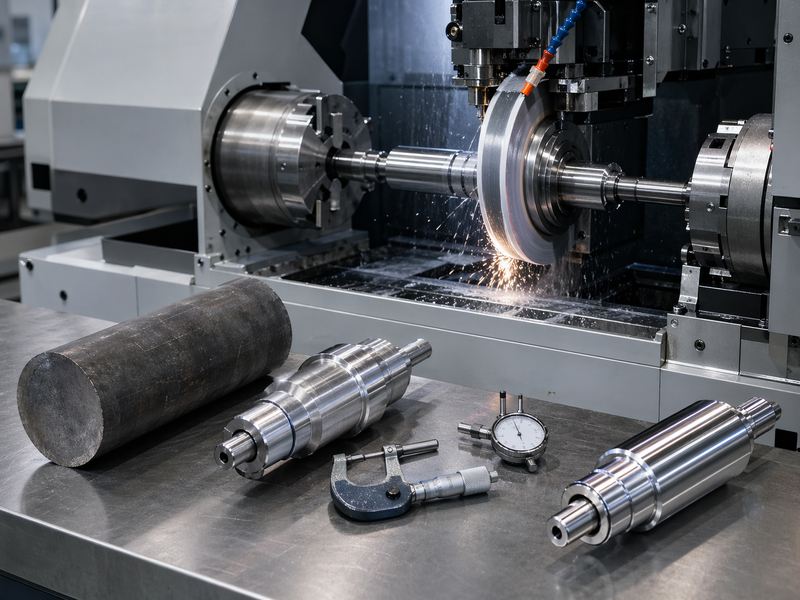
Factors Impacting the Performance of CNC Grinding
The effectiveness and results of the grinding process are influenced by a number of elements.
Key Influencing Factors
| Factor | Impact |
| Material hardness | Affects wheel wear and speed |
| Wheel type | Determines cutting efficiency |
| Coolant use | Prevents overheating |
| Machine precision | Ensures accuracy |
| Operator skill | Impact setup and optimization |
Understanding these factors helps optimize both quality and cost.
Advantages of CNC Grinding
CNC grinding offers numerous benefits in precision manufacturing:
Major Advantages
- Exceptional accuracy and repeatability
- Ability to machine hard materials
- Superior surface finish
- High automation and efficiency
- Consistent quality in mass production
Challenges in CNC Grinding
Despite its advantages, CNC grinding also presents challenges:
Common Issues
- High equipment cost
- Slower material removal rate
- Wheel wear and maintenance
- Thermal damage risk (burning, distortion)
Proper process control and expertise are required to overcome these challenges.
Applications of CNC Grinding
CNC grinding is widely used across industries:
Typical Applications
- Aerospace components (turbine blades, shafts)
- Automotive parts (gears, crankshafts)
- Medical devices (implants, surgical tools)
- Tool and die manufacturing
- Precision engineering components
Its versatility makes it indispensable in high-precision industries.
Best Practices for Optimizing CNC Grinding Workflow
To achieve optimal results, manufacturers should follow best practices:
Process Optimization Tips
- Select the right grinding wheel for the material
- Maintain proper coolant flow
- Optimize feed rates and speeds
- Regularly dress and maintain wheels
- Use advanced CNC programming
These practices improve efficiency, reduce costs, and enhance product quality.
The CNC grinding workflow—from raw material preparation to final inspection—is a highly controlled and precise process that ensures superior part quality. To achieve the required accuracy, surface smoothness, and performance, each step is essential.
Manufacturers can maximize output, cut expenses, and uphold high levels of quality by comprehending the entire system. As technology advances, CNC grinding will continue to be a vital process in industries that demand precision, reliability, and excellence.