
Raw machined metals rarely survive harsh environments without protection. A professional surface finishing service applies protective or aesthetic coatings to bare materials. This step is critical for both precision CNC machined components and fabricated sheet metal parts.
Unfinished metal remains vulnerable to oxidation, mechanical wear, and chemical degradation. Applying the correct finish extends the functional lifespan of the component. It also ensures the final product meets exact engineering specifications.
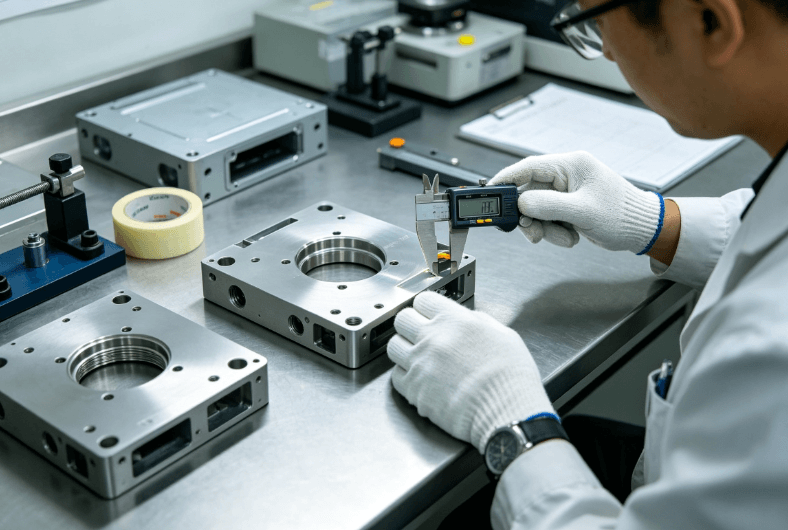
What is a Surface Finishing Service in Manufacturing?
Surface finishing refers to any process that alters the exterior of a manufactured part. Engineers rely on these services to meet specific functional or cosmetic requirements. The chosen method dictates how a part interacts with its operating environment.
Key manufacturing objectives include:
-
Corrosion resistance: Preventing oxidation in high-humidity or chemical environments.
-
Wear resistance: Hardening the exterior to withstand mechanical friction.
-
Electrical properties: Enhancing conductivity or providing strategic insulation.
-
Aesthetic appeal: Delivering uniform colors and textures for consumer products.
In large-volume production, the finishing phase requires strict process control. A slight deviation in chemical bath temperature can compromise an entire batch. Quality inspection is necessary to verify thickness and adhesion.
Common Surface Finishing Options for Metal Parts
Different manufacturing methods require distinct chemical and mechanical treatments. CNC machined parts often need high-precision finishes that preserve tight tolerances. Sheet metal components typically require durable coverage across large surface areas.
Standard Finishing Options Comparison
| Process | Best Application | Typical Thickness | Primary Benefit |
| Type II Anodizing | Aluminum CNC parts | 5–25 µm | Color variety, basic wear |
| Hardcoat Anodizing | Aerospace components | 25–50 µm | Extreme abrasion resistance |
| Powder Coating | Sheet metal enclosures | 50–150 µm | High impact and UV resistance |
| Electroless Nickel | Precision steel parts | 2–25 µm | Uniform thickness, lubricity |
| Passivation | Stainless steel | Negligible | Superior rust prevention |
Anodizing Capabilities
Anodizing converts the metal surface into a durable anodic oxide finish. It is primarily used for aluminum and titanium components. The process integrates directly with the underlying metal, meaning it cannot chip or peel.
Powder Coating Applications
This process applies a dry powder under an electrostatic charge. The part then enters a curing oven to form a robust exterior skin. Powder coating is highly effective for sheet metal brackets and outdoor panels.
Plating Technologies
Plating deposits a thin layer of a secondary metal onto the substrate. Zinc plating is a common choice for cost-effective corrosion protection on steel parts. Electroless nickel plating offers a completely uniform thickness across complex internal geometries.
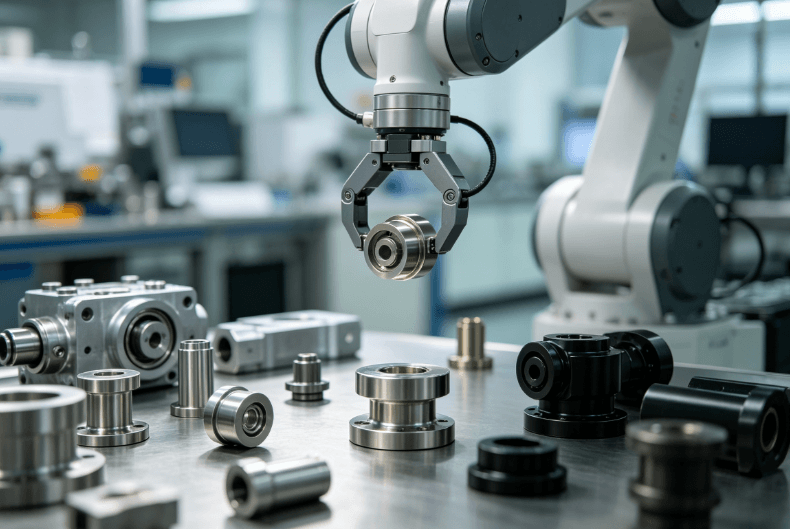
Application Scenarios: Matching Finishes to Industrial Environments
Selecting the right finish requires understanding the final application. Different industries enforce strict testing standards and environmental requirements. Materials must perform reliably under specific operating conditions.
Medical and Healthcare Equipment
Medical devices require surfaces that withstand repeated chemical sterilization cycles. Stainless steel parts usually undergo passivation or electropolishing procedures. These processes remove surface impurities and prevent bacterial accumulation.
Automotive and Aerospace Sectors
Automotive environments typically require exceptional resistance to salt spray and fluctuating temperatures. Engine components often utilize hardcoat anodizing or electroless nickel plating. Aerospace parts rely on chemical conversion coatings to maintain electrical continuity safely.
Industrial Automation and Robotics
Robotic arms and automated machinery experience continuous mechanical friction. Engineers specify hardened finishes to extend the lifespan of moving joints. Wear-resistant plating ensures high-speed CNC components maintain precision over time.
How Tolerances Impact Surface Finishing Service Workflows
Every coating adds some dimension to the physical part. Machinists must calculate this buildup before cutting the raw material. Ignoring finish thickness leads directly to assembly interference during final production.
For example, powder coating can easily add 150 microns of thickness. This volume can bridge small holes and alter the fit of threaded features. Engineers must specify clear masking requirements on technical drawings to protect critical dimensions.
Anodizing actually penetrates the aluminum while simultaneously building upon it. A 10-micron anodic layer changes the physical part dimension by roughly 5 microns. Precision CNC machining workflows must proactively account for these micro-variations.
Evaluating Integrated Manufacturing and Finishing Capabilities
Managing separate machining and plating vendors increases daily project risks. Shipping bare parts between facilities extends timelines and exposes metal to moisture. Tolerance disputes frequently arise between the machine shop and the finishing vendor.
Partnering with an integrated provider simplifies the manufacturing supply chain. Facilities like Anhua Machining offer comprehensive production support under one roof. They combine CNC machining and sheet metal fabrication with complete in-house finishing options.
Their integrated capabilities include anodizing, powder coating, painting, and precision plating. This setup ensures the original machinist verifies final dimensions after the finish is applied. Consolidating these steps reduces communication costs and significantly improves production consistency.
FAQ
Does anodizing change the dimensions of a CNC machined part?
Yes, anodizing alters part dimensions. The oxide layer both penetrates the substrate and builds outward simultaneously. Engineers must adjust initial machining tolerances to accommodate this predictable growth.
What is the difference between plating and coating?
Plating bonds a secondary metal to the substrate via chemical or electrical processes. Coating applies a polymer, paint, or powder layer over the existing surface. Plating typically offers superior dimensional control for precision CNC parts.
How does passivation work on stainless steel?
Passivation is a controlled chemical bath treatment, usually utilizing nitric or citric acid. It aggressively removes free iron from the surface of the stainless steel. This promotes the natural formation of a passive chromium oxide layer against rust.
Can standard sheet metal parts be anodized?
Yes, but only if the sheet metal is fabricated from aluminum or titanium alloys. Powder coating is far more common for standard steel sheet metal enclosures. The optimal choice depends entirely on the base material and specific environmental requirements.
Reference Sources
-
ISO 2081: Metallic and other inorganic coatings — Electroplated coatings of zinc on iron or steel.
-
ASTM B580: Standard Specification for Anodic Oxide Coatings on Aluminum.
-
ASTM A967: Standard Specification for Chemical Passivation Treatments for Stainless Steel Parts.