
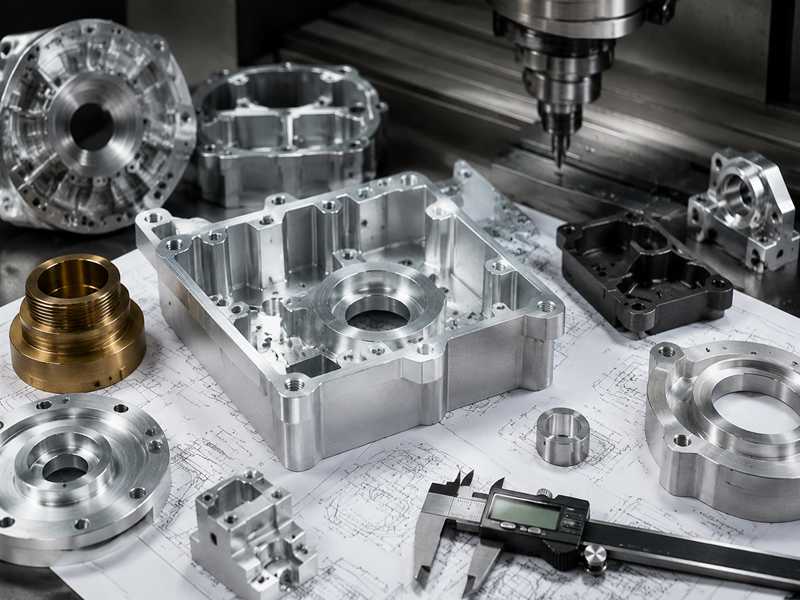
Wall thickness is a key design factor for CNC machined components because it affects part strength, machining stability, and dimensional accuracy. Insufficient wall thickness may cause vibration, deformation, and tolerance issues during production.
A proper wall thickness design balances functional requirements and manufacturing limitations, helping buyers reduce design changes, improve manufacturability, and control production costs.
Why Is Minimum Wall Thickness Important for CNC Machining?
Minimum wall thickness is not only related to the strength of the finished component but also affects the overall manufacturing process. A wall that is too thin may create challenges during machining, inspection, and final assembly.
Common issues caused by insufficient wall thickness include:
- Increased vibration during cutting
- Deformation caused by machining forces
- Reduced surface finish quality
- Difficulty maintaining dimensional accuracy
For example, when producing a thin-walled aluminum housing, cutting forces may cause slight movement of the wall structure. This can result in tolerance variation even when the original CAD model meets the design requirements.
Key Parameters Governing Minimum Wall Thickness
Suitable wall thickness values for CNC‑produced parts are determined by a variety of design specifications and production constraints. Material properties, part geometry, machining methods, and functional requirements all influence how thin a structure can be while maintaining reliable performance.
| Factor | Influence on Wall Thickness Design |
| Material Type | Determines strength, rigidity, and deformation resistance |
| Part Geometry | Affects structural stability and stress distribution |
| Machining Process | Influences cutting forces and manufacturing stability |
| Functional Requirements | Determines required strength and operating performance |
1. Material Type
Material selection directly affects the minimum wall thickness that can be achieved in CNC machining. Materials with higher strength and rigidity can generally support thinner structures, while softer or more flexible materials may require additional thickness for stability.
Aluminum is commonly selected for lightweight CNC components because of its good machinability, while stainless steel and alloy materials are often preferred for applications requiring higher strength and durability.
2. Part Geometry
The overall size and shape of a component influence wall thickness requirements. Large housings, deep cavities, and complex structures usually need stronger supporting walls to prevent deformation and maintain dimensional accuracy during machining.
Components with uneven structures or sharp transitions may require additional support because stress concentration can affect machining stability and final performance.
3. Machining Process
CNC machining involves cutting forces, tool movement, and heat generation, which can affect thin-wall stability. Designers should consider tool accessibility, fixture support, and machining sequence when developing components with reduced wall thickness.
A suitable machining strategy can help minimize vibration and deformation, but the part design should still provide enough rigidity for stable production.
4. Functional Requirements
The final application determines the required strength and rigidity of a CNC machined part. Components exposed to heavy loads, vibration, pressure, or repeated movement usually require thicker walls compared with lightweight structural parts.
Understanding the working environment helps buyers avoid over-thin designs that may reduce product reliability during actual operation.
Recommended Wall Thickness for Common CNC Materials
The minimum practical wall thickness varies depending on material properties, part dimensions, geometry complexity, and machining conditions. The figures listed below serve as baseline guidelines for early‑phase design work.
| Material | Recommended Minimum Wall Thickness |
| Aluminum | Around 0.8–1.5 mm for small features, thicker for larger structures |
| Stainless Steel | Around 1–2 mm depending on geometry and machining conditions |
| Brass | Around 1–1.5 mm for stable machining applications |
| Engineering Plastics | Around 1.5–3 mm depending on flexibility and usage requirements |
These values provide an initial reference rather than a fixed manufacturing limit. During design review, CNC suppliers may recommend adjustments based on tooling selection, machining strategy, and actual application requirements.
How to Improve Thin Wall CNC Machined Component Design?
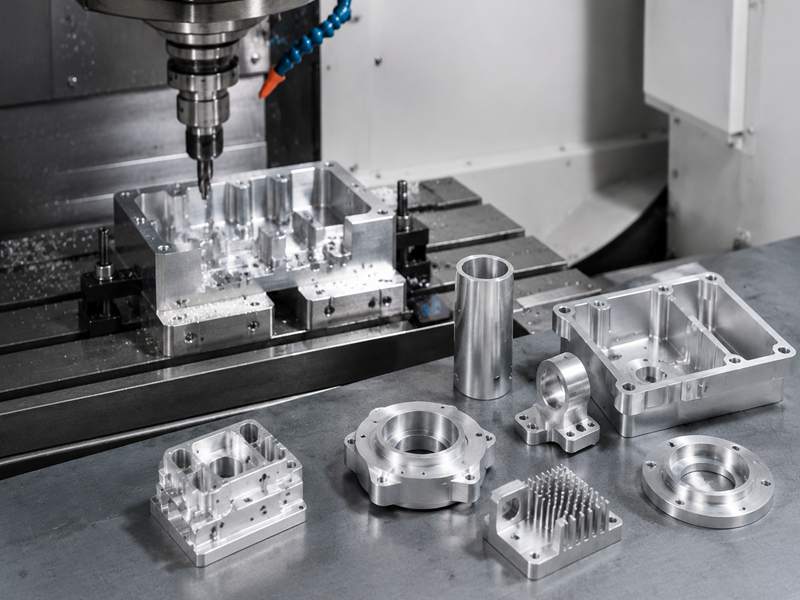
Thin-wall components require careful design planning to achieve both lightweight structures and reliable performance. The following approaches can help improve manufacturability while maintaining the required function.
1. Maintain Uniform Wall Thickness
Consistent wall thickness helps reduce uneven stress distribution and improves machining stability. Sudden changes in thickness may create weak areas or increase the possibility of deformation during production.
A better design approach includes:
- Keeping wall thickness as consistent as possible
- Avoiding sudden thickness transitions
- Using smooth geometry changes when needed
Uniform structures allow manufacturers to achieve more predictable machining conditions and improve final dimensional consistency.
2. Avoid Unnecessary Thin Features
Reducing wall thickness without a clear functional purpose may increase machining difficulty and affect part reliability. Designers should focus on removing unnecessary material rather than creating extremely thin structures.
When optimizing thin-wall designs:
- Remove only unnecessary material
- Maintain sufficient structural support
- Consider machining stability during weight reduction
A balanced design can reduce material usage while maintaining enough rigidity for machining and final application requirements.
3. Add Support Features When Required
When a design requires thinner walls, additional support structures can improve rigidity without significantly increasing overall weight.
Common support features include:
- Reinforcing ribs
- Internal supports
- Rounded transitions
- Additional mounting structures
For example, a lightweight CNC machined housing can use reinforcing ribs to improve strength instead of increasing the thickness of the entire wall structure.
Common Applications of Thin-Wall CNC Machined Components
Thin-wall CNC machined components are widely used in industries where weight reduction, compact structures, and precision performance are important.
| Industry | Typical Thin-Wall CNC Applications |
| Automotive | Lightweight housings, brackets, structural components |
| Aerospace | Weight-reduced frames and precision components |
| Robotics | Motor housings, mounting plates, support parts |
| Industrial Equipment | Covers, fixtures, machine components |
1. Automotive Components
Automotive-industry components frequently adopt thin-wall structures to cut down mass without sacrificing adequate mechanical performance. CNC machining allows manufacturers to create accurate structures for reliable assembly and operation.
2. Aerospace Components
Aerospace components require lightweight structures with optimized material distribution. Thin-wall CNC machining helps remove unnecessary material while maintaining required strength and dimensional accuracy.
3. Robotics Components
Robotic systems usually require compact components with limited installation space. Proper wall thickness design helps integrate motors, sensors, and mechanical connections while maintaining structural stability.
4. Industrial Equipment Parts
Industrial machines often use thin-wall housings, covers, and fixtures that require a balance between weight, strength, and manufacturing efficiency.
How to Reduce Thin Wall CNC Machining Risks?
Thin-wall components can be successfully manufactured when design requirements and production conditions are considered together. Early communication with CNC machining suppliers can help identify potential issues before production begins.
Consider the following approaches:
- Increase wall thickness where additional strength is required
- Avoid unnecessary thin structures
- Add ribs or supports instead of excessive material
- Select suitable machining parameters
- Review manufacturability before final production
For buyers developing prototypes or customized CNC components, checking wall thickness during the design stage can reduce unexpected modifications and improve production efficiency.
Wall Thickness Design Checklist for CNC Components
A practical wall thickness design should balance functional requirements with manufacturing feasibility.
| Design Factor | Key Consideration |
| Material Selection | Match thickness with material strength and rigidity |
| Part Geometry | Avoid weak structures and uneven walls |
| Machining Process | Ensure stable tool access and cutting conditions |
| Support Features | Add reinforcement when thinner walls are required |
| Application Requirements | Consider load, vibration, and assembly conditions |