
When Structural Integrity Drives Procurement
Industrial OEM projects demand predictable performance under extreme stress. Components like turbine discs, load-bearing shafts, and heavy machinery gears cannot fail.
Standard casting often leaves internal voids. Machining from bar stock cuts through the natural grain flow of the metal. This compromises structural integrity.
A reliable custom forging service solves these problems by plastically deforming the metal into shape. This aligns the internal grain structure with the component’s contours. The result is superior fatigue resistance, higher impact strength, and a lower rejection rate during ultrasonic testing.
Procurement managers must look beyond raw part prices. Evaluating a forging partner requires understanding their tooling capabilities, metallurgical expertise, and secondary machining capacities.
Why Grain Flow Dictates Component Strength
Engineers specify forged components over cast or machined alternatives primarily for metallurgical soundness.
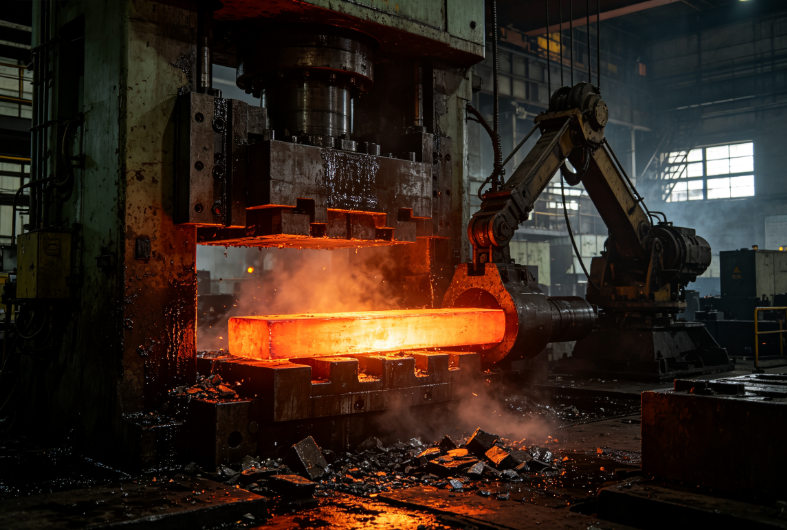
What happens during the custom forging process?
-
Grain Alignment: Pressure forces the metal’s grain to flow along the part’s geometry.
-
Porosity Elimination: Extreme compression closes internal micro-voids present in raw ingots.
-
Mechanical Enhancement: Yield strength, ductility, and impact toughness are significantly increased.
-
Weight Reduction: Higher strength-to-weight ratios allow engineers to design lighter, thinner parts.
This continuous grain flow acts like the grain in wood. It provides maximum strength at critical stress points.
Comparing Custom Forging Methods
Selecting the right forging technique impacts tooling costs, minimum order quantities (MOQ), and final tolerances. A competent custom forging service will recommend the best method based on your volume and geometry.
| Forging Method | Best For | Tooling Cost | Tolerance Level | Volume Suitability |
| Open-Die Forging | Large, simple shapes (shafts, cylinders) | Low | Broad | Low volume / Prototypes |
| Closed-Die Forging | Complex geometries (gears, connecting rods) | High | Tight | High volume production |
| Seamless Rolled Ring | Symmetrical rings (bearings, flanges) | Moderate | Moderate | Medium to High volume |
Closed-die forging requires significant upfront investment in hardened steel dies. However, it yields near-net-shape components. This drastically reduces secondary CNC machining time and material waste during large production runs.
Material Selection for High-Stress Environments
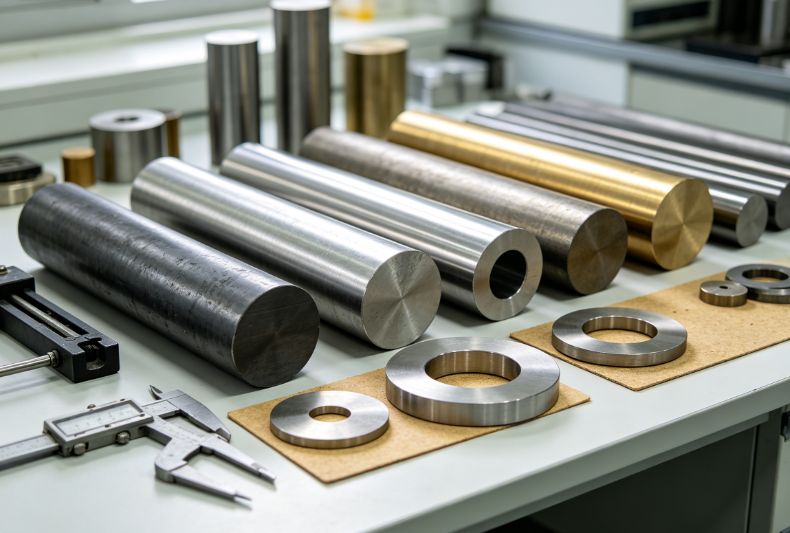
Not all metals forge equally. Your custom forging service must possess specific thermal management expertise for different alloys.
Carbon and Alloy Steels (e.g., 4140, 4340)
These are the backbone of industrial manufacturing. They offer excellent hardenability and wear resistance. Automotive and heavy machinery sectors rely heavily on forged alloy steels for drive shafts and gears.
Titanium Alloys (e.g., Ti-6Al-4V)
Aerospace and medical applications demand titanium. It is notoriously difficult to forge due to its narrow working temperature window. Precise temperature control is mandatory to prevent surface cracking.
Nickel-Based Superalloys (e.g., Inconel)
Used in power generation and jet engines. These alloys maintain their structural integrity at extreme temperatures. Forging Inconel requires specialized high-tonnage presses and robust die materials.
Validating a Custom Forging Service Provider
Vendor evaluation in the metalworking industry goes beyond the initial quote. B2B buyers must assess technical capacity and quality assurance protocols.
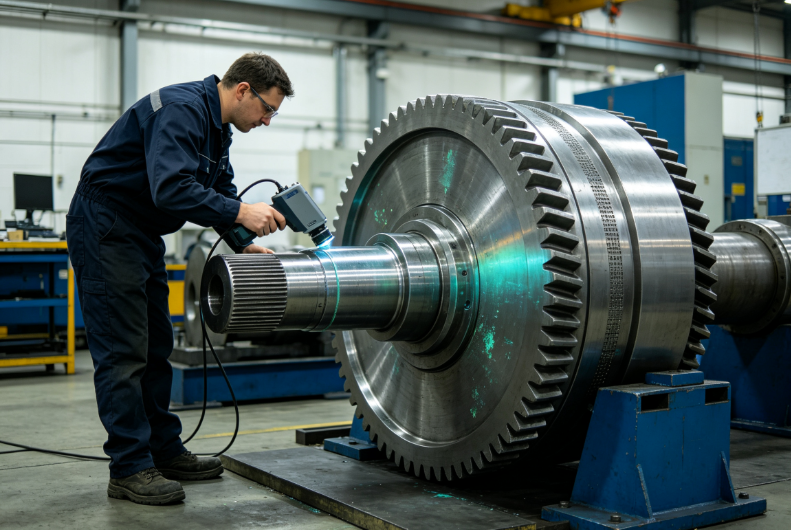
Look for non-destructive testing (NDT) capabilities. Visual inspection is never enough for high-strength parts. Your supplier should perform Magnetic Particle Inspection (MPI) to detect surface flaws. They must also use Ultrasonic Testing (UT) to verify internal density.
Verify their compliance standards. Facilities manufacturing critical components should hold ISO 9001 certifications. Aerospace or automotive projects may require AS9100 or IATF 16949 compliance.
Consider supply chain consolidation. A supplier that only provides raw forgings forces you to manage secondary machine shops. This increases lead times and shipping costs. Providers offering both forging and precision CNC machining deliver ready-to-assemble components.
Streamlining Your RFQ with L&Y Machining
Transitioning from design to production requires clear communication and a capable manufacturing partner. Detailed RFQ packages prevent sampling delays and unexpected tooling modifications.
Provide comprehensive data upfront. Include 3D CAD models, material specifications, required tolerances, and estimated annual volumes. Clearly state any secondary operations like heat treatment, surface finishing, or CNC turning.
For projects demanding precision and reliability, reviewing the full capability of a custom forging service is the logical next step. Integrated facilities like L&Y Machining specialize in transforming raw alloys into high-strength, precision-engineered components tailored to your exact specifications.
To discuss your specific project parameters, material requirements, or to initiate the quoting process, you can easily contact the engineering team directly. Early supplier involvement often helps optimize part design, reducing overall tooling costs and shortening production lead times.
Frequently Asked Questions
What drives the tooling cost in closed-die custom forging?
Die costs depend on component size, geometry complexity, and the required die material. Dies for high-temperature alloys like Inconel wear out faster and require more expensive, heat-resistant tool steels, driving up initial costs.
What is the typical lead time for custom forged samples?
Initial sample delivery typically ranges from 6 to 12 weeks. This timeframe includes die design, CNC machining of the tooling, trial forging, thermal treatments, and dimensional inspection.
How do suppliers determine the Minimum Order Quantity (MOQ)?
MOQ is largely dictated by furnace setup times and die installation costs. Open-die forging often supports low MOQs or even single prototypes. Closed-die forging usually requires hundreds or thousands of units to justify the setup labor and tooling amortization.
Can a custom forging service provide fully finished parts?
Top-tier industrial suppliers offer turnkey solutions. They manage the initial forging, subsequent heat treatments (like quenching and tempering), and final CNC machining to achieve the exact tolerances required for final assembly.
Reference Sources
-
ASTM A668 / A668M: Standard Specification for Steel Forgings, Carbon and Alloy, for General Industrial Use.
-
ISO 9001:2015: Quality management systems — Requirements for manufacturing compliance.
-
SAE AMS-H-6875: Heat Treatment of Steel Raw Materials — Aerospace Material Specification.